Sports Dentistry: Protecting Athletes Teeth and Oral Health
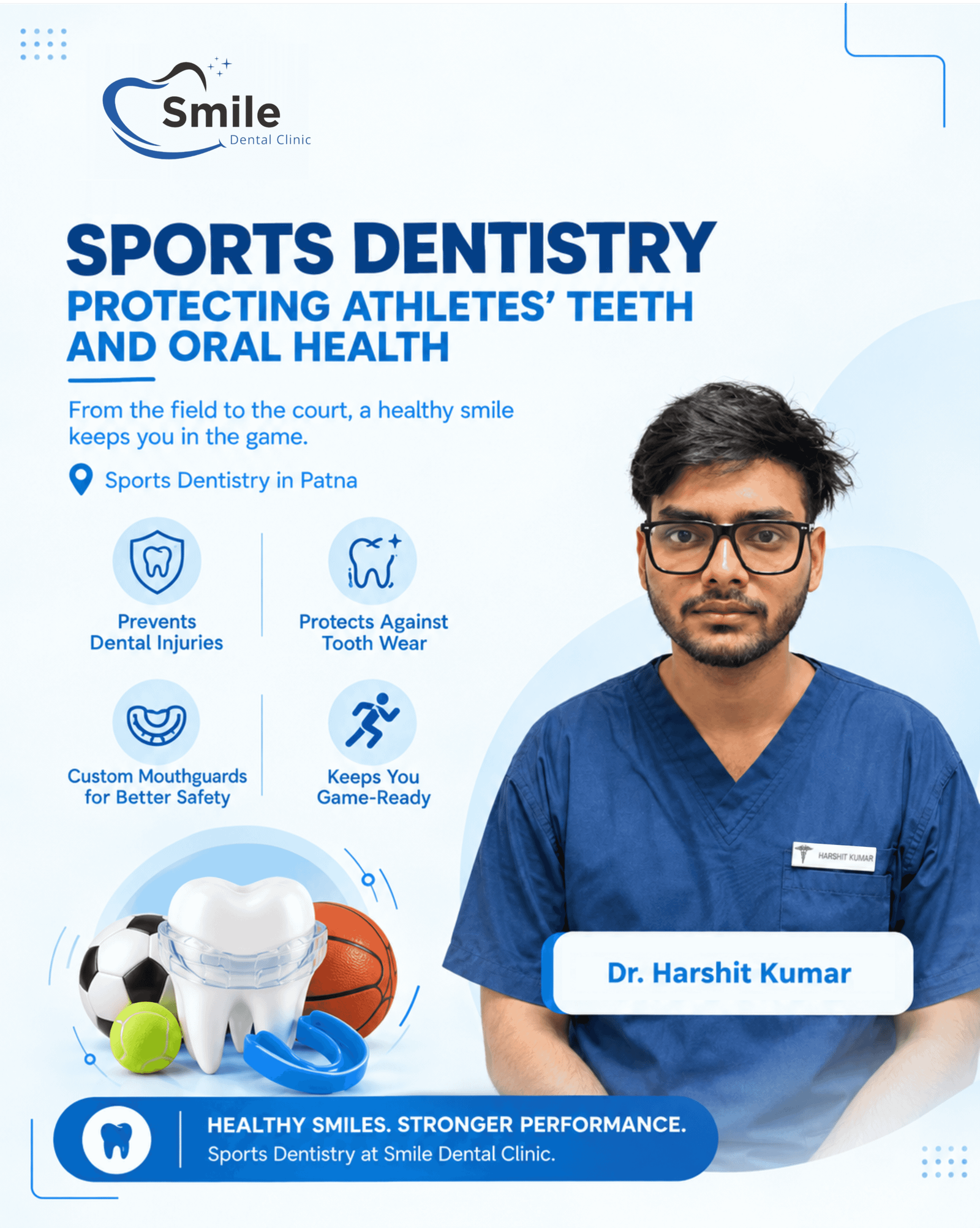
Sports Dentistry: Protecting Athletes Teeth and Oral Health
Sports are an important part of a healthy and active lifestyle. Whether you play cricket, football, hockey, basketball, boxing, badminton, or participate in other sports, protecting your body from injury is essential. However, one area that is sometimes overlooked is oral health.
A dental injury during sports can damage teeth, gums, lips, and the jaw. In some cases, a seemingly small injury can result in a fractured, displaced, or completely knocked-out tooth.
This is where sports dentistry plays an important role.
Sports dentistry focuses on preventing and managing dental injuries related to sports and helping athletes maintain good oral health. With appropriate preventive care, athletes can reduce the risk of dental trauma and protect their smiles while staying active.
What Is Sports Dentistry?
Sports dentistry is an area of dental care focused on the oral health needs of people who participate in sports and physical activities.
It includes:
Prevention of sports-related dental injuries
Custom mouthguard fabrication
Treatment of dental trauma
Management of fractured or displaced teeth
Care after a knocked-out tooth
Protection of teeth during contact sports
Regular dental examinations for athletes
Oral health advice for active individuals
Sports dentistry is not limited to professional athletes. Children, teenagers, recreational players, gym enthusiasts, and school or college athletes can also benefit from preventive dental care.
Why Do Athletes Need Dental Protection?
Many sports involve physical contact, falls, collisions, or equipment that can accidentally hit the face.
Sports such as:
Cricket
Football
Hockey
Basketball
Boxing
Wrestling
Martial arts
Kabaddi
Cycling
Skateboarding
can carry a risk of injury to the mouth and teeth.
A direct impact can cause a tooth to chip, fracture, become loose, move out of position, or be completely knocked out. Injuries can also affect the lips, cheeks, gums, and jaw.
Wearing an appropriate mouthguard is one of the important ways athletes can help protect their teeth during sports.
What Is a Sports Mouthguard?
A mouthguard is a protective device worn inside the mouth during sports activities. It helps create a protective barrier between the teeth and surrounding soft tissues.
A mouthguard may help reduce the risk and severity of certain dental injuries caused by impact.
There are different types of mouthguards, including:
1. Stock Mouthguards
These are pre-formed mouthguards that are ready to wear. They are generally available in standard sizes.
2. Boil-and-Bite Mouthguards
These mouthguards are softened in warm water and then adapted to the teeth. They can provide a better fit than some stock mouthguards.
3. Custom-Fitted Mouthguards
These are designed by a dental professional based on an impression or digital scan of the patient's teeth.
A properly fitted custom mouthguard can provide a more individualized fit and may be more comfortable for regular sports participation.
Who Should Consider a Sports Mouthguard?
Anyone participating in a sport where there is a risk of facial or dental impact should consider discussing mouthguard protection with a dentist.
This is particularly relevant for participants in contact and collision sports.
For children and teenagers, properly fitted protective equipment is especially important because their teeth and jaws are still developing.
Parents should consider discussing sports mouthguards with their child's dentist if the child regularly participates in activities where dental injuries may occur.
Common Sports-Related Dental Injuries
Dental injuries can vary from minor damage to serious trauma.
Chipped or Fractured Teeth
A strong impact can break part of a tooth. Depending on the extent of the fracture, treatment may range from smoothing a minor chip to restorative treatment for a larger fracture.
Loose Teeth
A blow to the mouth can cause a tooth to become loose. A dental examination is important because the supporting tissues may also have been injured.
Displaced Teeth
A traumatic impact can move a tooth from its normal position. This requires prompt dental assessment.
Knocked-Out Tooth
A completely displaced permanent tooth is a dental emergency. Immediate professional assessment can be important for determining appropriate management.
Soft-Tissue Injuries
The lips, cheeks, and gums can also be injured during sports. A mouthguard can provide an additional protective layer between the teeth and soft tissues.
What Should You Do If a Tooth Is Knocked Out?
A knocked-out permanent tooth requires urgent dental attention.
If this happens:
Stay calm and locate the tooth.
Hold the tooth by the crown rather than the root.
If the tooth is dirty, gently rinse it without scrubbing the root.
If possible and appropriate, the tooth may be carefully repositioned in its socket.
If repositioning is not possible, keep the tooth moist using an appropriate storage medium and seek emergency dental care immediately.
Contact a dentist as soon as possible.
Do not scrub the root, allow it to dry out unnecessarily, or delay seeking professional care.
The appropriate emergency management can depend on the patient's age, the type of tooth, and the nature of the injury.
Regular Dental Check-ups for Athletes
Preventive dental care is important for athletes just as it is for everyone else.
Regular dental examinations can help identify:
Tooth decay
Gum problems
Cracked or damaged teeth
Dental infections
Bite-related concerns
Problems that may become worse during sports activity
Treating dental problems early can help athletes avoid unexpected dental problems during training or competition.
Oral Health and Sports Performance
Good oral health contributes to overall health and well-being. Dental pain, infection, or untreated oral problems can affect an individual's comfort and daily activities.
Athletes should therefore include dental care as part of their overall health routine, alongside proper nutrition, hydration, exercise, recovery, and injury prevention.
Sports Dentistry for Children and Young Athletes
Children and teenagers participate in many sports through schools, clubs, academies, and recreational programs.
Because dental injuries can occur during physical activities, parents and coaches should understand the importance of appropriate protective equipment.
A dentist can evaluate the child's oral health and advise whether a sports mouthguard is appropriate.
Children should also receive regular dental check-ups to identify problems such as cavities, gum issues, or developing orthodontic concerns.
How Can a Dentist Help Athletes?
A dental professional can provide several services related to sports dentistry, including:
Sports dental examinations
Dental trauma assessment
Custom mouthguard consultation
Mouthguard fitting
Treatment of fractured teeth
Management of dental injuries
Emergency dental care
Preventive dental care
Oral hygiene guidance
The exact treatment depends on the athlete's dental condition and the type of injury or preventive need.
Sports Dentistry in Patna
Athletes and sports enthusiasts in Patna can benefit from including preventive dental care in their regular health routine.
Whether you are a professional athlete, school or college player, cricket enthusiast, football player, martial artist, cyclist, or simply someone who enjoys staying active, protecting your teeth can help you participate in sports with greater confidence.
A dental consultation can help identify your individual risks and determine whether additional protection, such as a properly fitted mouthguard, may be appropriate.