5 Reasons Your Tooth Still Hurts After Taking Painkillers
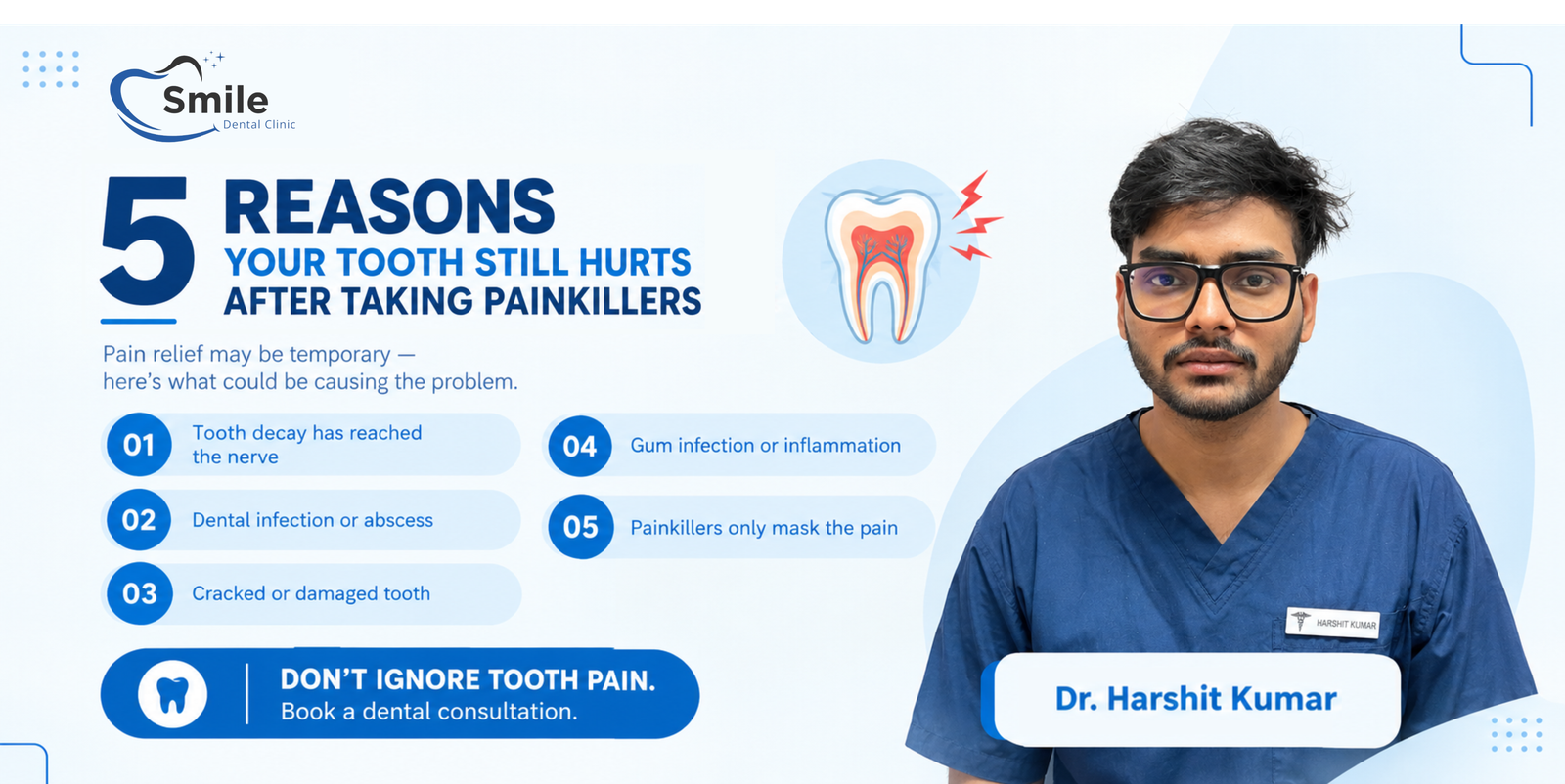
5 Reasons Your Tooth Still Hurts After Taking Painkillers
Painkillers can temporarily reduce pain, but they usually do not treat the underlying cause of the problem. If your tooth continues to hurt, it may be a sign that you need proper dental examination and treatment.
Here are 5 common reasons why your tooth may still be hurting after taking painkillers.
1. The Infection Is Still Present
If bacteria have reached the inner part of the tooth (pulp), painkillers cannot eliminate the infection.
You may need treatment such as:
* Root canal treatment
* Drainage of an abscess
* Extraction, if the tooth cannot be saved
Pain relief does not always mean the infection is gone.
2. The Tooth Nerve Is Inflamed or Damaged
Conditions such as irreversible pulpitis can cause severe, persistent, or throbbing pain.
Common symptoms include:
* Pain that starts without warning
* Pain that worsens at night
* Sensitivity to hot or cold
* Pain that continues even after the stimulus is removed
In such cases, simply taking painkillers may not provide lasting relief.
3. There May Be a Dental Abscess
A dental abscess is a collection of pus caused by infection.
Possible signs include:
* Swelling near the tooth
* Pus or bad taste in the mouth
* Fever
* Pain while biting
* Swelling of the face or gums
An abscess requires professional dental treatment. Painkillers alone cannot remove pus or eliminate the source of infection.
4. The Tooth May Have a Crack or Fracture
A cracked tooth can cause sharp pain while chewing or biting.
Sometimes the crack is not visible during a routine examination. Depending on the case, the dentist may recommend:
* Dental X-ray
* CBCT scan
* Root canal treatment
* Crown placement
* Extraction in severely fractured teeth
Early diagnosis may help save the tooth.
5. The Actual Cause Has Not Been Diagnosed
Tooth pain may also be related to:
* Deep cavities
* Gum infection
* Impacted wisdom teeth
* High filling or crown
* Referred pain from another tooth
* Sinus-related problems
Taking medication without identifying the cause can delay the correct treatment.
When Should You Visit a Dentist?
You should seek dental care if you experience:
✅ Tooth pain lasting more than 1–2 days
✅ Swelling in the gums or face
✅ Fever with tooth pain
✅ Pain while biting
✅ Night-time throbbing pain
✅ Repeated need for painkillers
Final Takeaway
Painkillers can control symptoms, but they cannot repair a damaged tooth or remove the source of infection.
If your tooth pain keeps returning, the best solution is not another painkiller—it is a proper dental diagnosis.
📍 Smile Dental Clinic
Pillar No. 39, 1st Floor, Ashok Rajpath, Patna
Book a dental consultation to identify the actual cause of your tooth pain.