Dental Bridge: Types, Benefits, Procedure, Cost & Aftercare
Dental Bridge: Types, Benefits, Procedure, Cost & Aftercare
Missing a tooth can affect more than just your smile. It can make chewing difficult, affect your speech, and allow nearby teeth to shift into the empty space. A dental bridge is one of the commonly used solutions for replacing one or more missing teeth and restoring the function and appearance of your smile.
At Smile Dental Clinic, Patna, we provide personalized dental treatment based on your oral health, the condition of your surrounding teeth, and your individual needs.
What Is a Dental Bridge?
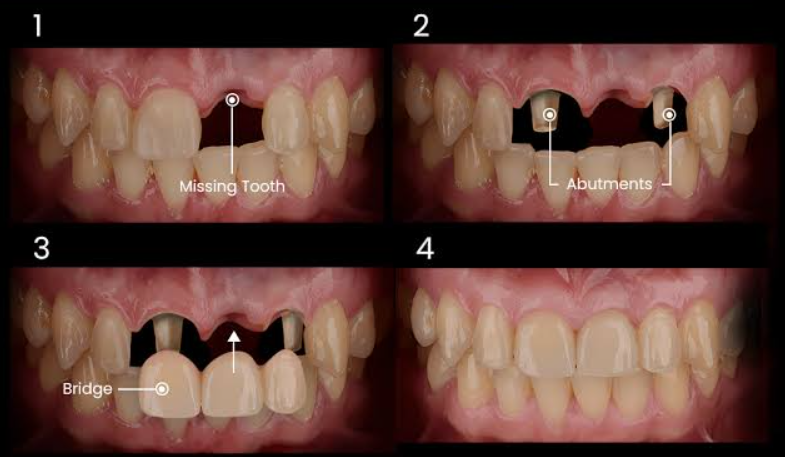
A dental bridge is a fixed dental restoration used to replace one or more missing teeth. It generally consists of an artificial tooth, called a pontic, supported by dental crowns or other attachments connected to the neighboring teeth or dental implants.
Unlike a removable denture, a conventional dental bridge is fixed in place and is not normally removed by the patient.
A dental bridge can help restore:
Your ability to chew comfortably
The appearance of your smile
Proper distribution of biting forces
Speech that may have been affected by missing teeth
The shape and alignment of your dental arch
Why Should Missing Teeth Be Replaced?
Leaving a missing tooth untreated for a long time may affect your oral function and the position of neighboring teeth. Teeth next to the gap can gradually move, while the opposing tooth may also change position.
Replacing a missing tooth can help restore proper chewing function, support a balanced bite, and improve the appearance of your smile. It can also help maintain the natural alignment of your remaining teeth and make it easier to maintain good oral hygiene around the area.
Some common reasons to consider replacing a missing tooth include:
Improved chewing: Missing teeth can make it difficult to chew certain foods comfortably. Replacing the tooth can help restore chewing function.
Better appearance: A missing tooth, particularly in the front of the mouth, can affect your smile and confidence.
Support for neighboring teeth: A replacement can help prevent nearby teeth from drifting into the empty space.
Maintaining your bite: Replacing missing teeth can help maintain a more balanced relationship between your upper and lower teeth.
Improved speech: Missing teeth may affect the way certain sounds are pronounced. Replacing them can help improve speech in some cases.
Better oral function: Restoring the missing tooth can make everyday activities such as eating and speaking more comfortable.
If you have a missing tooth, it does not necessarily mean that a dental bridge is the only solution. Depending on your oral health and individual requirements, your dentist may recommend a dental bridge, dental implant, denture, or another restorative treatment.
A professional dental examination is the best way to determine which tooth-replacement option is suitable for you.
When Should You Consider a Dental Bridge?
If you have recently lost a tooth, it is a good idea to consult a dentist rather than leaving the space untreated for an extended period. Early evaluation allows your dentist to assess the surrounding teeth, gums, bite, and available treatment options.
You may consider discussing a dental bridge with your dentist if:
You have one or more missing teeth.
You have difficulty chewing because of a missing tooth.
You feel uncomfortable about a visible gap in your smile.
Your neighboring teeth are beginning to move toward the empty space.
You want a fixed alternative to a removable denture.
You have healthy supporting teeth that may be suitable for a bridge.
The right treatment depends on your individual dental condition, so professional evaluation is important before making a decision.
What Happens If a Missing Tooth Is Not Replaced?
A missing tooth can affect the way your remaining teeth function together. Over time, neighboring teeth may shift toward the empty space, potentially changing your bite.
Some people may also experience difficulty chewing certain foods or feel less confident when smiling or speaking.
However, the effects of tooth loss vary from person to person. Your dentist can evaluate your specific situation and explain whether replacing the tooth is recommended.
Dental Bridge Materials
Dental bridges can be made from different materials depending on their location, functional requirements, aesthetics, and the patient's dental condition.
Common materials include:
Porcelain or Ceramic
Ceramic and porcelain restorations can provide a natural-looking appearance and are often considered when aesthetics are important.
Porcelain-Fused-to-Metal
These restorations combine a metal structure with a tooth-colored outer layer. They can provide strength while maintaining a relatively natural appearance.
Zirconia
Zirconia is a strong ceramic material that is used in various dental restorations. Its suitability depends on the location of the missing tooth, bite, and other clinical factors.
Your dentist can recommend a suitable material after examining your teeth and discussing your expectations.
Can a Dental Bridge Prevent Further Dental Problems?
A dental bridge can help restore the space created by a missing tooth and support normal dental function. It can also help reduce unwanted movement of neighboring teeth toward the gap.
However, a bridge itself does not prevent tooth decay or gum disease. The supporting teeth and surrounding gums still require regular brushing, interdental cleaning, professional check-ups, and good oral hygiene.
Maintaining the health of the teeth supporting the bridge is especially important for the long-term success of the restoration.
Signs That Your Dental Bridge Needs Attention
Contact your dentist if you notice any unusual changes after receiving a dental bridge.
Important signs include:
Persistent pain around the bridge
Increased sensitivity
Bleeding or swelling of the gums
Food repeatedly getting trapped around the bridge
A feeling that the bridge has become loose
Changes in your bite
Damage or cracking of the restoration
Bad taste or persistent unpleasant odor around the area
Do not try to repair or adjust a dental bridge yourself. A dentist should examine the restoration and determine the cause of the problem.
Dental Bridge for Front Teeth
A missing front tooth can have a significant effect on your smile and confidence. Dental bridges can be designed to replace front teeth while matching the appearance of the surrounding natural teeth.
For front-tooth replacement, your dentist may pay particular attention to:
Tooth color
Shape and size
Smile line
Gum appearance
Alignment with neighboring teeth
Overall facial aesthetics
Depending on your situation, a traditional bridge, Maryland bridge, implant-supported restoration, or another treatment may be considered.
Dental Bridge for Back Teeth
Back teeth play an important role in chewing and maintaining an efficient bite. When a molar or premolar is missing, replacing it may help restore chewing function.
Because back teeth can experience significant biting forces, the dentist needs to carefully assess the supporting teeth, bite, available space, and restoration material before recommending a bridge.
Dental Bridge and Oral Hygiene
Getting a dental bridge does not mean that you can stop caring for the teeth underneath or around it.
Your daily oral hygiene routine should include:
Brush: Brush twice daily with fluoride toothpaste.
Clean between teeth: Use floss or an interdental cleaning device according to your dentist's recommendation.
Clean beneath the bridge: Special flossing techniques or interdental aids may be required to clean underneath the artificial tooth.
Regular dental visits: Professional examinations can help identify problems with the bridge, supporting teeth, or gums at an early stage.
Good oral hygiene is one of the most important factors in maintaining your natural teeth and dental restorations.
Is a Dental Bridge Right for You?
Every patient's dental needs are different. A dental bridge may be an excellent option for some patients, while others may benefit more from dental implants, dentures, or another restorative treatment.
Your dentist will consider your:
Oral and gum health
Number and location of missing teeth
Supporting tooth condition
Bite and chewing forces
Jawbone condition
Aesthetic expectations
Budget and treatment preferences
The goal is not simply to fill a gap but to choose a treatment that supports your overall oral health and function.
Dental Bridge Treatment in Patna
If you are searching for dental bridge treatment in Patna, Smile Dental Clinic provides personalized dental care based on each patient's oral health and treatment requirements.
Our dental team focuses on proper diagnosis, treatment planning, hygiene, patient comfort, and long-term oral health. Before starting treatment, patients can discuss their concerns and understand the available tooth-replacement options.
Smile Dental Clinic is located at Pillar No. 39, First Floor, Ashok Rajpath Road, Patna – 800004.
Final Thoughts
A missing tooth can affect your smile, chewing ability, speech, and confidence. A dental bridge is one of the established options for replacing missing teeth and restoring dental function.
From traditional and Maryland bridges to implant-supported options, different types of dental bridges are available for different clinical situations. The most appropriate choice depends on your teeth, gums, bite, bone support, aesthetic requirements, and overall oral health.
If you are considering a dental bridge in Patna, schedule a consultation with Smile Dental Clinic. A dental examination can help determine whether a bridge is suitable for you and what other treatment options may be available.
Schedule Your Dental Consultation
Smile Dental Clinic
Pillar No. 39, First Floor, Ashok Rajpath Road, Patna – 800004
Phone: +91-6202821102
Email: kharshit909@gmail.com
Healthy smiles begin with the right dental care.